

Why Physical AI Needs Better Middleware
Physical AI systems are transforming industries—from robotics to mobility—by relying on large foundation models, real-time sensor fusion, and adaptive decision-making. These systems demand low-latency, high-throughput communication and deterministic execution. Unfortunately, traditional middleware wasn’t designed for this level of complexity, scale, or responsiveness.
Physical AI Systems Are Evolving:
-
Foundation model–driven (multimodal, simulation-trained)
-
End-to-end learned pipelines (e.g. vision-to-action)
-
Closed-loop learning (reactive, RL-based behavior)
Challenges of Traditional Middleware:
-
ROS 2 and DDS are modular but not AI-native
-
Lack of support for real-time neural inference
-
Hard to scale for high-bandwidth, low-latency tasks
-
Static, non-adaptive control pipelines
Introducing Apex.OS for Physical AI
Apex.OS is designed from the ground up to meet the demands of Phyiscal AI systems. Whether you're building autonomous vehicles, smart robots, or edge AI infrastructure, Apex.OS delivers the performance, flexibility, and reliability needed to handle high-throughput data, real-time control, and scalable system integration—all while maintaining safety and determinism.
Purpose-built for Physical AI Workloads:
-
Real-time, zero-copy data transport
-
Safe and deterministic execution
-
Seamless deployment across hardware platforms
Core Middleware Capabilities:
-
Transport Management: Zero-copy, low-latency transfers
-
Prioritized Messaging: Critical path prioritization
-
Dynamic Execution: Adaptive control switching
-
Semantic Interfaces: Communicate at task/intent level
-
Synchronization: Across sensors, controllers, and time domains
End-to-End AI Integration Stack
Today’s Physical AI systems don't just need to run efficiently—they must integrate cleanly with ML pipelines, hardware accelerators, and cloud environments. Apex.OS works seamlessly with Apex.Alan to support end-to-end machine learning development, deployment, and monitoring—all within a safety-focused runtime.
With Apex.OS + Apex.Alan:
-
Streamlined ML deployment pipelines
-
Cloud-native GPU resource and model lifecycle management
-
Accelerated inference with minimal time-to-first-token (TTFT)
Secure Multi-Tenant Support:
-
Isolated application execution in shared infrastructure
-
Identity-based resource access and context management

Designed for Real-Time AI Workloads
AI workloads demand more than raw compute—they need intelligent orchestration across sensors, compute units, and networks. Apex.OS is engineered for data-heavy, time-sensitive environments, offering deterministic execution and synchronized data processing across both cloud and edge components.
Built for:
-
Vision + LiDAR + Audio fusion
-
Real-time token-based decision making
-
Reactive + predictive behavior blending
Handles:
-
Asynchronous execution
-
Distributed nodes (cloud and edge)
-
Time-synchronized data ingestion and control
Example Use Cases
From mobility to healthcare, Apex.OS has been deployed in a variety of high-performance, safety-critical environments. These examples highlight how Apex.OS enables real-time processing and data communication across industries with strict latency and determinism requirements.

Autonomous Vehicles
Smart Infrastructure
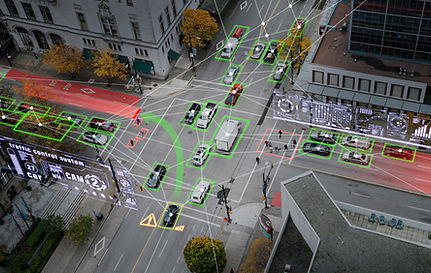
Manage traffic control, surveillance, and event response using AI foundation models and edge-cloud integration.
Robotics

Healthcare Devices
Drive surgical robots and diagnostic systems with safe, responsive closed-loop control.
Key Product Features
Today’s AI-native systems don't just need to run efficiently—they must integrate cleanly with ML pipelines, hardware accelerators, and cloud environments. Apex.OS works seamlessly with Apex.Alan to support end-to-end machine learning development, deployment, and monitoring—all within a safety-focused runtime.
Deterministic, fixed-order replay (for validation and debugging)
UDS diagnostics support (via DoIP)
Centralized + distributed data recording and playback
Integrates with leading simulation environments (e.g., Carla)
Supports MCAP, ROSBag, TECMP formats
Time domain synchronization across ECUs
Safety, Standards & Compatibility
Safety is not optional—it’s foundational. Apex.OS is designed with strict compliance in mind, offering alignment with leading automotive standards and seamless compatibility with existing tools and ecosystems.
Standards Support:
-
ISO 26262 (ASIL D)
-
ISO 21448 (SOTIF)
Compatibility:
-
AUTOSAR, DDS, SOME/IP, CAN, FlexRay
-
ROS 2 ecosystem tools (RViz, rosbag2, tf2, etc.)